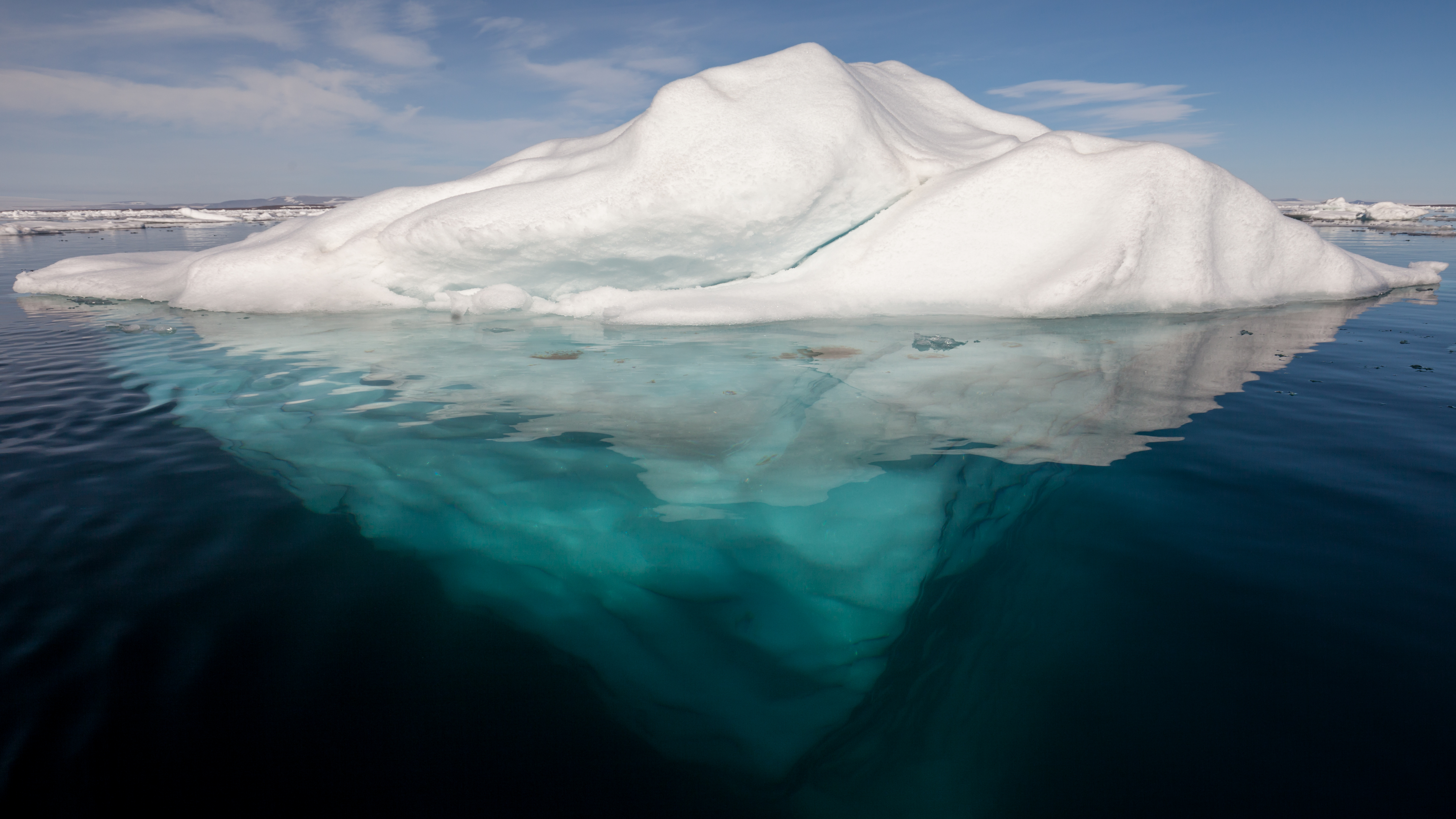
An iceberg is a large piece of freshwater ice that has broken off a glacier or an ice shelf and is floating freely in open (salt) water.[1][2] Another name for iceberg is “ice mountain”. Small bits of disintegrating icebergs are called “growlers” or “bergy bits”.
Icebergs are possible on Earth because the oceans are filled with liquid water, a substance less dense when solid than liquid. Planets with oceans consisting of different substances like methane cannot have icebergs, as their chunks of frozen liquid would sink.
Because 90 percent of an iceberg is below the surface and not visible, icebergs are considered a serious maritime hazard. The 1912 loss of the “unsinkable” RMS Titanic led to the formation of the International Ice Patrol in 1914.
The expression “tip of the iceberg”, illustrates a difficulty that is only a small, visible part of a larger, complex problem.
The largest iceberg ever reliably recorded was Iceberg B-15A which split off the Ross Ice Shelf in Antarctica in 2000.
 Nature